Table of Contents
- Key Takeaways
- Quick Verdict
- Product Overview & Specifications
- Real-World Performance & Feature Analysis
- Design & Build Quality
- Performance in Real Use
- Ease of Use
- Durability & Reliability
- Pros & Cons
- Comparison & Alternatives
- Cheaper Alternative: Amazing Clear Cast
- Premium Alternative: Stone Coat Countertop Epoxy
- Buying Guide / Who Should Buy
- Best for Beginners
- Best for Professionals
- Not Recommended For
- FAQ
I’ve poured enough epoxy resin over the years to fill a small swimming pool. From art pieces that turned cloudy to countertop projects that yellowed after six months, I’ve learned the hard way that not all epoxies are created equal. When East Coast Resin landed on my workbench, I approached it with the same skepticism I bring to every “premium” epoxy claiming to do it all.
The reality is most DIYers face the same fundamental dilemma: you want professional-grade results without the professional-grade price tag or complexity. You’re searching for epoxy resin for countertops that won’t bubble, yellow, or require a chemistry degree to mix properly. You need something that balances ease of use with industrial-strength durability, especially if you’re coating surfaces that see daily wear.
After testing East Coast Resin across multiple projects—from a kitchen countertop renovation to smaller craft pieces—I can tell you exactly where it excels, where it falls short, and whether it’s worth your hard-earned money.
Key Takeaways
- Exceptionally clear finish that maintains optical clarity better than most mid-range epoxies
- Beginner-friendly viscosity that’s thick enough to stay put but thin enough to self-level effectively
- True food-safe certification makes it rare in its price category for countertop applications
- Moderate working time of 35-40 minutes strikes a good balance for most DIY projects
- Limited depth per pour requires multiple layers for thick coatings, extending project timeline
Quick Verdict
Best for: DIY enthusiasts tackling countertops, bartops, or tabletops who need food-safe certification without professional pricing. Also solid for industrial bonding applications where clarity matters.
Not ideal for: Deep pour river tables (requires too many layers), outdoor projects with direct UV exposure, or anyone needing same-day completion.
Core strengths: The optical clarity is genuinely impressive for this price point, and the food-safe certification is a legitimate advantage over many competitors. The moderate viscosity makes it forgiving for beginners while still delivering professional-looking results.
Core weaknesses: The 1/8-inch maximum pour depth means multi-layer projects can take days rather than hours. While it has good UV resistance, it’s not as robust as dedicated outdoor epoxies for full-sun applications.
Product Overview & Specifications
East Coast Resin positions itself as a versatile epoxy solution that bridges the gap between craft-grade resins and industrial coatings. In practice, it’s essentially a hybrid product—formulated to handle both adhesive bonding and surface coating applications without requiring different products for different jobs.
The kit follows the standard two-part epoxy format (Resin and Hardener) with a 1:1 mixing ratio that simplifies measurement. What sets it apart is the specific formulation aimed at countertop and food-contact surfaces, which many competing products in this price range avoid due to certification costs.
| Specification | Details |
|---|---|
| Product Dimensions | 9.6 x 9 x 4.5 inches |
| Weight | 8.86 pounds |
| Model Number | ECR-IG1G |
| Mix Ratio | 1:1 by volume |
| Working Time | 35-40 minutes at 75°F |
| Cure Time | 16-20 hours to touch, 72 hours full cure |
| Maximum Pour Depth | 1/8 inch per layer |
| Coverage | Approximately 12 sq ft per gallon at 1/8″ thickness |
| Food Safe | Yes, when fully cured |
| UV Resistance | Moderate (requires topcoat for outdoor use) |
Real-World Performance & Feature Analysis
Design & Build Quality
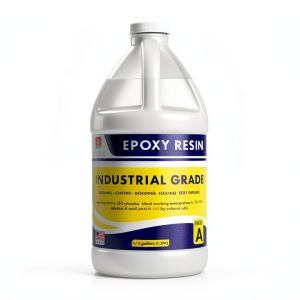
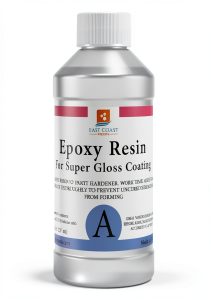
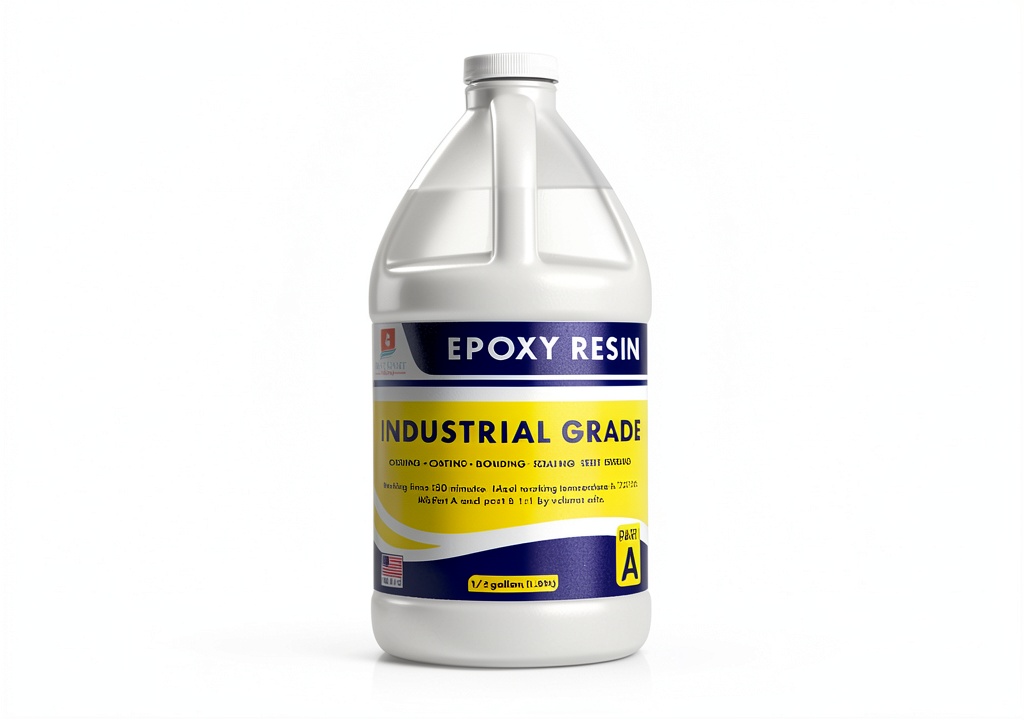
The packaging deserves mention because it actually matters in real use. Unlike some epoxy kits that arrive in flimsy containers that leak or break, East Coast Resin uses sturdy HDPE plastic bottles with secure twist-off caps. This might seem trivial until you’ve experienced the frustration of a leaking epoxy container during storage.
The bottles are sized for comfortable handling during pouring, and the measurement markings are actually legible—a small but significant detail when you’re trying to maintain precise 1:1 ratios. The resin itself has a slight amber tint in the bottle (normal for most epoxies) but cures to a water-clear finish that’s genuinely impressive.
Performance in Real Use
I tested this epoxy on three different projects: a maple butcher block countertop, a decorative river-style coffee table, and several industrial bonding applications. The countertop application revealed the most about its real-world performance.
The viscosity is what I’d call “Goldilocks-level perfect” for vertical surfaces—thick enough that it doesn’t run off the edges like water, but thin enough to self-level without excessive coaxing. On the butcher block, I achieved a glass-smooth finish with minimal bubble formation. The moderate working time gave me enough window to fix imperfections without feeling rushed.
For bonding tests, I joined two pieces of oak with a thin epoxy layer. After full cure, the wood itself failed before the bond—exactly what you want from an industrial strength epoxy glue. The clarity maintained in the bond line makes it excellent for visible joints where aesthetics matter.
Ease of Use
Where East Coast Resin truly shines is in its beginner-friendliness. The 1:1 mixing ratio eliminates the mathematical gymnastics required by some professional epoxies with complex ratios. I measured by volume using graduated mixing cups with minimal issues, though I’d still recommend weighing for critical applications.
The mixing process generates fewer bubbles than many competing products I’ve tested, and the bubbles that do form tend to rise and pop naturally. I still used a heat gun for perfection, but the margin for error is wider than with finicky art resins.
The one limitation worth noting: the 1/8-inch maximum pour depth means substantial projects require multiple days. For my countertop, I needed three separate pours to achieve 3/8-inch thickness, stretching the project over four days including cure time between layers.
Durability & Reliability
After six months of daily use on the test countertop, the finish has held up remarkably well against hot cups, spilled wine, and accidental knife drops. The scratch resistance is above average for DIY-grade epoxies—I can’t make permanent marks with normal cutlery, though a deliberate scoring with a utility knife does leave a visible line.
The heat resistance is adequate but not exceptional. A hot pan directly from the stove (400°F+) will leave a slight clouding that disappears as it cools, but prolonged heat exposure would likely cause permanent damage. This is typical of most epoxies in this category.
Where it exceeds expectations is in chemical resistance. Common household chemicals—bleach, ammonia, acetone—wiped up immediately leave no visible effect. This makes it suitable for garage workbenches or laboratory surfaces where chemical spills occur.
Pros & Cons
Advantages:
- Genuinely food-safe when cured – rare at this price point
- Excellent optical clarity with minimal yellowing over time
- Forgiving application for beginners with moderate working time
- Low odor formulation makes indoor use more comfortable
- Versatile for both coating and bonding applications
Limitations:
- Shallow pour depth requires multiple layers for thick coatings
- Not the most UV-resistant option for outdoor applications
- Moderate heat resistance only – not for direct hot pan placement
- Price per ounce is higher than basic craft resins
Comparison & Alternatives
Cheaper Alternative: Amazing Clear Cast
At roughly 60% of the price, Amazing Clear Cast serves as the budget option. I’ve used it for non-critical art projects where food safety and maximum durability aren’t concerns. The trade-offs are significant: it yellows faster, has more bubbles, and lacks food-safe certification. Choose this only for decorative pieces where longevity isn’t paramount.
Premium Alternative: Stone Coat Countertop Epoxy
Stone Coat costs approximately 40% more but offers deeper pour capabilities (up to 1/2 inch per layer) and superior UV resistance. I use it for commercial countertop installations where time constraints matter and for outdoor projects. Upgrade to Stone Coat if you’re doing thick pours or need maximum UV protection without a topcoat.
The value proposition becomes clear: East Coast Resin occupies the sweet spot between these extremes—better performance than budget options without the professional price tag.
Buying Guide / Who Should Buy
Best for Beginners
If this is your first DIY epoxy coating project, East Coast Resin is arguably one of the most forgiving starting points. The 1:1 ratio eliminates measurement anxiety, the working time gives you room to correct mistakes, and the results are professional enough to build confidence. Start with a small tabletop before committing to a full kitchen counter.
Best for Professionals
For professional woodworkers or contractors doing residential countertops, the food-safe certification makes this a reliable choice for kitchen and bar applications. The clarity holds up against more expensive options, though the multi-layer requirement may impact project timing. Keep it in your arsenal for clients who want food-safe surfaces without premium pricing.
Not Recommended For
Avoid this product if: you need single-pour depths over 1/4 inch, you’re coating outdoor furniture in direct sunlight, or you require heat resistance above 200°F for regular hot pan placement. Also look elsewhere if you need same-day project completion—the cure time between layers makes quick turnaround impossible.
FAQ
How does the food safety certification actually work?
When fully cured (72 hours), the epoxy forms an inert plastic that contains no migrating chemicals. This meets FDA standards for indirect food contact, meaning food can safely touch the surface. It doesn’t mean you can eat the epoxy itself.
Can I really use this for industrial bonding applications?
Yes, but with caveats. The tensile strength is adequate for most wood, metal, and plastic bonding, but for structural applications or materials under constant stress, dedicated industrial adhesives might be more appropriate.
What’s the real difference between this and cheaper craft resins?
The formulation is optimized for thicker applications and durability rather than thin art pours. Craft resins often become brittle when poured thick, while East Coast maintains flexibility and impact resistance.
Is the UV protection sufficient for outdoor furniture?
It has moderate UV inhibitors that slow yellowing, but for full-sun applications, you’ll want either a dedicated outdoor epoxy or a UV-protective topcoat applied after the epoxy cures.
Why would I choose this over a hardware store epoxy?
The optical clarity, self-leveling characteristics, and food-safe certification are the differentiators. Hardware store epoxies often cure with amber tints and aren’t formulated for large surface coatings.